Rye doesn't behave like wheat. If you've made a decent wheat sourdough and assumed rye is just a flour swap, your first 100% rye loaf will confuse you: the dough feels like wet clay, won't develop gluten no matter how long you knead, and may collapse in the oven or come out gummy in the middle. None of that means you did anything wrong. It means rye plays by different rules.
Here's what actually changes when you bake with rye, and how to work with the flour instead of fighting it.
Why rye behaves differently
Rye contains very little functional gluten. The proteins are there, but they don't form the elastic network wheat does. What dominates rye dough instead is pentosans — long-chain carbohydrates that absorb up to eight times their weight in water and form a sticky, gel-like structure. This is why rye dough feels tacky and dense rather than stretchy.
Two consequences follow:
- Kneading does almost nothing. You're not building gluten because there's almost none to build. Mix until uniform and stop.
- Structure comes from starch and pentosans, not gluten. That structure is fragile and easily destroyed by enzymes already present in the grain.
The enzyme problem is the big one. Rye is high in alpha-amylase, which breaks starch into sugars. If amylase runs wild during baking, it liquefies the crumb before the starch can set, and you get a gummy, dense, unsliceable loaf. The fix is acidity: a low pH (around 4.3 or below) deactivates amylase. That's why traditional rye is always sourdough. Yeast-only rye breads exist, but they rely on commercial acidifiers or scalds to compensate.
This amylase-driven gumminess is specific to rye, but the broader family of gummy-crumb causes — underproofing, underbaking, slicing warm — applies to every loaf. If you want the full diagnostic, see why sourdough turns out gummy. For rye, just remember: enough acid, enough bake, enough cooling.
The four core rules
1. Use more starter than you would with wheat
A 100% rye dough typically uses 30–40% prefermented flour, compared to 15–20% for a wheat loaf. You need that extra acidity to control the amylase. A rye sourdough with only 10% starter will almost certainly come out gummy.
If you're calculating prefermented flour percentage for your recipe, the calculator on this site will save you the arithmetic — plug in your total flour weight and target PFF and it gives you starter quantity directly.
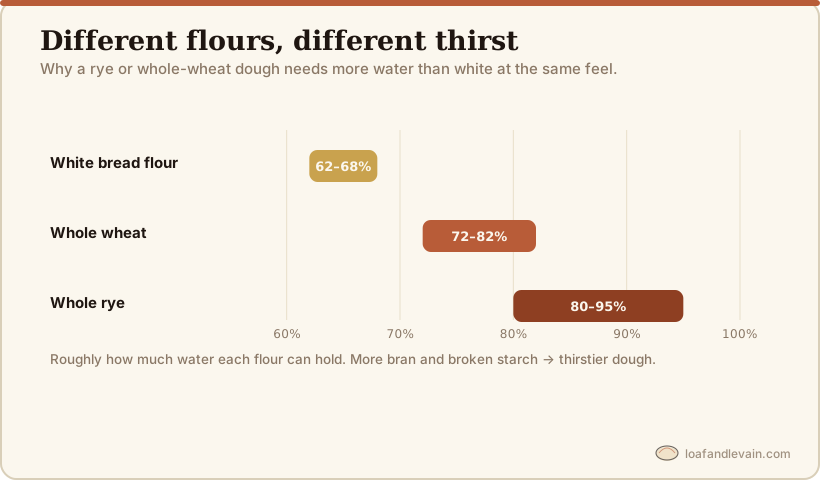
2. Hydration runs high — 80% to 95%
Because pentosans absorb so much water, rye dough needs more hydration than wheat to be workable. A "stiff" rye dough is around 75% hydration and feels like modeling clay. An 85% rye dough is the standard working consistency: tacky, paste-like, scoopable but not pourable.
Don't try to handle it like wheat. You won't shape it; you'll pat it into a pan or scrape it into a banneton with wet hands or a wet bench scraper. If you want to understand how the water-to-flour ratio drives feel, hydration explained covers the underlying math.
3. Ferment warm and watch the dough, not the clock
Rye ferments faster than wheat, and you have two valid temperature philosophies to choose from.
For speed, run the rye starter and dough warm — 28–30°C (82–86°F). This is what most German bakery schedules assume, and it pushes a 100% rye bulk down to 1.5–3 hours versus 4–6 for wheat. The trade-off is flavor: warm and fast favors lactic acid and a rounder, milder sour.
The Scandinavian convention runs cooler — 20–24°C (68–75°F). It trades speed for nuance. A cooler ferment leans more acetic, develops a sharper, more complex tang, and gives the pentosan gel longer to set, which many bakers find produces a cleaner slice in dense ryes. Bulk simply takes longer at this temperature. Neither is wrong; pick the flavor you want and let the clock follow the temperature, not the other way around.
The canonical bulk math used by the bulk-fermentation-by-temperature guide still applies — time roughly doubles for every 8°C you drop — but rye reaches its (lower) target rise sooner than wheat at any given temperature, so read the dough, not a wheat timetable.
Signs your rye dough is ready:
- Volume increase of roughly 30–50% (not double — rye can't hold that much gas)
- Small bubbles visible on the surface
- A clean, fruity-sour smell — not acetone, not nail polish
Overproofed rye collapses without warning and bakes into a flat, gummy brick. Underproofed rye is dense and lacks flavor. The window is narrower than wheat's.
4. Bake hot, then long
Rye needs a hard initial blast to set the crust, then a long, slower bake to dry the crumb. A typical schedule for a 1 kg loaf:
| Stage | Temperature | Time | Steam |
|---|---|---|---|
| Initial blast | 250°C (480°F) | 10 minutes | Yes |
| Main bake | 200°C (390°F) | 50–60 minutes | No |
| Pull at internal temp | 98–99°C (208–210°F) | — | — |
Pull the loaf only once the centre reads 98–99°C (208–210°F) on an instant-read thermometer; rye holds more moisture than wheat and wants the top of that range. Then — and this is non-negotiable — wait at least 24 hours before slicing. Rye crumb is still setting after it comes out of the oven. Cut it warm and it'll smear into a gummy mess that has nothing to do with your technique.
Rye types and how they behave
Not all rye flour is the same, and substituting one for another will change your loaf significantly.
| Flour | Extraction | Use case | Hydration target |
|---|---|---|---|
| Light/white rye | ~70% | Mild flavor, lighter crumb, mixed with wheat | 70–75% |
| Medium rye | ~85% | All-purpose rye baking | 80–85% |
| Dark rye / whole rye | 100% | Dense, intense loaves, Scandinavian-style | 85–95% |
| Pumpernickel (coarse whole rye) | 100%, coarse | Long-baked dense breads | 90–100%+ |
| Cracked/chopped rye | whole kernels | Soakers and inclusions | varies |
If a recipe calls for medium rye and you use whole rye, expect to add 5–10% more water. Going the other direction, reduce water or your dough will be soup.
Building a rye starter
You can convert a wheat starter to rye over about a week of feeds, or build one from scratch in 5–7 days. Rye starters are easier than wheat to get going — the grain carries plenty of microbes and enzymes — but they look and smell different.
A healthy rye starter:
- Is thick and paste-like, not stretchy
- Doubles or nearly doubles in 4–6 hours at 26°C (78°F)
- Smells fruity-sour, sometimes faintly like apples or vinegar
- Has small, uniform bubbles rather than the big web you see in a wheat starter
Feed it at 1:2:2 or 1:3:3 ratios (starter:flour:water) at 100% hydration; the mechanics of choosing a ratio are covered in starter feeding ratios. Some bakers keep stiffer rye starters at 60–80% hydration for milder flavor, but 100% is the easy default. I keep a small rye build going in a separate jar through the colder months because it stays reliably active when my wheat starter gets sluggish.
If you bake rye occasionally and wheat usually, you don't need two permanent starters. Take a spoonful of your wheat starter, feed it with rye flour for two consecutive feeds, and use it. After baking, top up the jar with wheat flour and you're back where you started.
Mixed rye-wheat doughs
Most "rye breads" sold in bakeries are actually 20–40% rye, 60–80% wheat. This is the easiest entry point. The wheat provides gluten structure; the rye adds flavor, color, and that characteristic tang.
A few guidelines:
- Under 20% rye: treat the dough almost like a wheat dough. Standard hydration, normal shaping, normal proof times.
- 20–40% rye: reduce hydration slightly (rye absorbs water from the wheat), shorten bulk by 20–30%, expect a tackier dough.
- 40–60% rye: transitional zone. Gluten development is weak. Use a pan or expect a flat loaf.
- Above 60% rye: treat it as a rye loaf. Pan baking only, scoop don't shape, follow the rye rules above.
Common mistakes
Treating it like wheat. Trying to stretch and fold a 90% rye dough. Trying to shape it on a floured counter. Expecting an open, airy crumb. Stop. Rye is dense by nature, and that's the point.
Slicing too early. This produces most "my rye is gummy" complaints. Wait a full day.
A weak or underfed starter. A sluggish starter can't acidify the dough enough to control amylase, and weak fermentation is one of the most common roots of dense crumb generally — see how to fix dense sourdough for the full ranking of causes. For rye specifically: if your starter isn't doubling reliably within about 6 hours, fix that before you bake.
Skipping the scald (for dense rye styles). Scandinavian and German-style ryes often use a Brühstück — flour or cracked grain mixed with boiling water and left overnight. This pregelatinizes starch, adds sweetness, and dramatically improves keeping quality. Worth learning if you like dark, dense ryes.
Too much flour on the surface. Rye dough is sticky. Resist the urge to flour it heavily — wet your hands and tools instead. Excess flour creates dry seams that crack badly during baking.
Common questions
Can I make rye sourdough without a Dutch oven?
Yes, and you often shouldn't use one. Most rye loaves are baked in tin pans because the dough won't hold a shape. For freestanding rye loaves at 60–70% rye with wheat, a Dutch oven works fine. For 100% rye, use a loaf pan.
Why is my rye bread gummy in the middle?
Three usual suspects, in order: (1) you cut it before it fully cooled — wait 24 hours; (2) underbaked — check internal temperature, aim for 98–99°C (208–210°F); (3) insufficient acidity, meaning your starter was weak or your prefermented flour percentage was too low. The general gummy-crumb causes are covered in why sourdough is gummy.
How long does rye sourdough keep?
Better than wheat. A well-made dense rye keeps 5–7 days at room temperature wrapped in linen or paper, and the flavor improves for the first 2–3 days. Sliced and frozen, it keeps months and toasts well straight from frozen.
Can I use a wheat starter for rye bread?
Yes, but the flavor will be different and you may need slightly more starter to get enough acidity. For the best rye flavor, refresh your wheat starter with rye flour for two feeds before mixing your dough.
What's the difference between rye sourdough and pumpernickel?
Pumpernickel is a specific style: coarse whole-rye flour, often with soakers and scalds, baked at low temperatures (around 120°C/250°F) for 12–24 hours. The long, low bake caramelizes the starches and produces the characteristic dark color and sweetness. Standard rye sourdough is baked hot and fast by comparison.
Why does my rye dough smell like vinegar or solvent?
Vinegar is normal — rye starters produce more acetic acid than wheat starters, especially when kept cool (the Scandinavian 20–24°C range above) or fed stiffly. Solvent or nail-polish smells (acetone) indicate severe overfermentation. Feed your starter more often or at higher ratios.
Bake the cooling time into the plan, not just the dough
The thing that turns rye from frustrating to dependable isn't a better recipe — it's accepting that the loaf isn't finished when it leaves the oven. Wheat rewards you the same afternoon. Rye makes you wait a day while the pentosan gel and gelatinized starch finish setting into a sliceable crumb.
So plan backwards from the slice. If you want rye bread for Sunday breakfast, mix Friday and bake Friday evening: the loaf rests overnight and through Saturday, and by Sunday morning it cuts clean, tastes deeper, and keeps for the rest of the week. Build that 24-hour pause into your schedule from the start and rye stops surprising you — the patience is the recipe.