The colon notation describes a feed by weight: starter to flour to water. A 1:2:2 feed starting from 20 g of ripe starter means 20 g starter + 40 g flour + 40 g water. The ratio you pick decides two things that matter for baking — how long the starter takes to peak, and how strong and mild it is when it gets there. Most home bakers use one ratio for everything and never think about it. That works, but matching the ratio to your schedule gives you control over exactly when your starter is ready to mix.
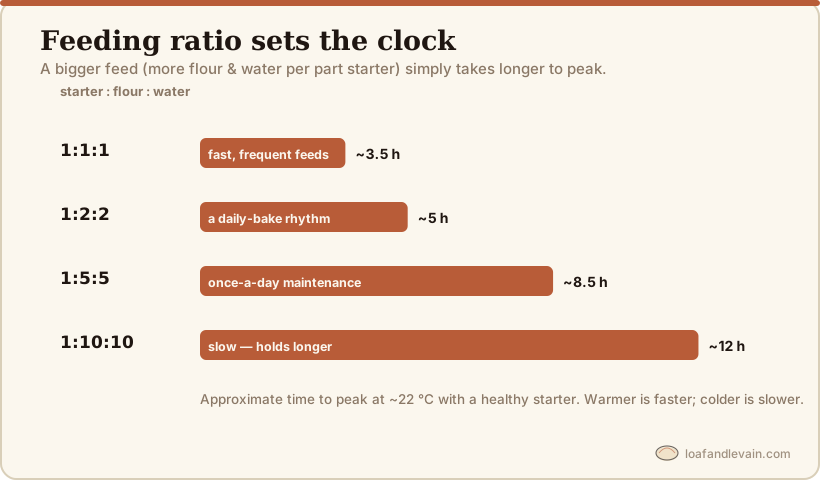
What changes as the ratio gets bigger
A 1:1:1 feed has a high starter concentration. The yeast and bacteria carried over from the previous feed dominate the fresh flour and water, so they eat through the available sugars fast and peak quickly. The population doesn't grow much before it runs out of food.
A 1:5:5 feed has a low starter concentration. The same carried-over population now has five times more flour to work through. It peaks slowly, but the cells multiply substantially before the food runs low. The peak is bigger, the starter is stronger, and the time to peak is much longer.
In between, 1:2:2 sits at the sweet spot for most home bakers: it peaks in a manageable window, makes enough ripe starter to mix a loaf and feed the jar again, and gives enough food that the starter doesn't crash within a couple of hours of peaking.
Time to peak at typical kitchen temperatures
These are approximate, calibrated for a healthy 100% hydration starter at 22°C (72°F) kitchen temperature. Cooler kitchens add time; warmer kitchens cut it. Temperature moves these numbers more than ratio does — the same biology that governs bulk fermentation by temperature governs the jar.
| Ratio | Peak time at 22°C (72°F) | Use case |
|---|---|---|
| 1:1:1 | 3–4 h | Refresh feed before a build feed; quick maintenance |
| 1:2:2 | 5–6 h | Standard pre-bake feed; the home-baker default |
| 1:3:3 | 7–8 h | Overnight peak (feed in the evening, bake midday) |
| 1:5:5 | 8–10 h | Long overnight; or to calm an over-acidic starter |
| 1:10:10 | 12–16 h | Very dilute feed; less common, useful for slow vacations |
Drop the kitchen about 6–8°C (roughly 11–14°F) below that reference and these times roughly double. At 16°C (61°F), a 1:2:2 takes 10–12 hours to peak instead of 5–6. This is exactly why a winter starter feels broken when it isn't — see winter sourdough for the warm-spot tricks that fix it, and summer sourdough for when peak arrives faster than you want.
When to use a 1:1:1
This is a tight feed. Reach for it when:
- You need to bake same-day and can't wait 8 hours. A 1:1:1 fed in the morning peaks by lunch.
- The starter has been weak or sluggish. Concentrated feeds (1:1:1, or even 1:0.5:0.5) rebuild yeast population faster than dilute ones.
- You want a refresh feed before a build feed. Coming out of the fridge, a 1:1:1 wakes the population up before a 1:2:2 builds the volume you actually need.
The trade-off: 1:1:1 starters peak fast and crash fast. Miss the window by an hour and you're mixing with falling starter, which behaves like under-strength starter and runs your bulk long.
When to use a 1:2:2
The default. Use it when:
- You feed the night before for a morning bake — it peaks 5–6 hours after feeding and holds near peak for another hour or two.
- You feed in the morning for an evening bake — same window.
- Your kitchen sits at typical room temperature, 20–24°C (68–75°F).
- You have no strong reason to do anything else.
Most published sourdough recipes assume a 1:2:2 feed unless they say otherwise. If a formula just says "100 g active starter," it's expecting something fed around this ratio and used near peak.
When to use a 1:5:5 or higher
A loose feed. Use it when:
- You want a long, forgiving peak window — 8–10 hours, ideal for an overnight feed timed to a morning mix.
- The starter has gone too sour. A 1:5:5 dilutes the accumulated acids and gives you a milder, sweeter starter within a feed or two.
- You want maximum yeast strength. A bigger food supply means more yeast cells produced before the crash.
- You're keeping the starter at room temperature between bakes — a bigger feed simply lasts longer before it needs the next one.
The trade-off: long waits and less margin if you misjudge timing. A 1:5:5 that you forget about for three extra hours can swing from peak to flat and sour.
Why peak timing beats the clock
The roughly one-hour window centred on peak is when the starter holds maximum yeast cell count and minimum bacterial dominance. Mix with starter two hours past peak and the dough ferments more slowly — yeast cells are already dying back — and bakes more acidic. Mix two hours before peak and there isn't enough yeast biomass yet, so bulk drags. Catching peak is what the float test is checking for, and getting it right is half the battle against a dense loaf.
So the move is simple: pick the ratio that puts peak at the time you want to mix. A warm kitchen and a quick bake want 1:1:1; an overnight rise wants 1:3:3 or 1:5:5. If you'd rather not run the arithmetic backwards from your mix time, the Starter tab on the calculator does it — give it your target peak time, kitchen temperature, and how many feeds you want, and it returns the schedule and gram amounts for each step.
Multi-feed building
For a starter coming out of the fridge after a week or more, one feed usually isn't enough. The yeast population is depressed, and a single feed peaks too weakly for reliable baking.
The standard 2-feed protocol:
- Refresh feed (1:1:1 or 1:0.5:0.5): small ratio, concentrates the survivors. Peaks in 4–6 hours.
- Build feed (1:2:2): the moment the refresh peaks, build up to the volume you need. Peaks in 5–6 hours.
Total: roughly 9–12 hours from fridge to bakeable starter.
For a fridge-forgotten or visibly neglected starter (three weeks or more), step up to a 3-feed protocol:
- Wake feed (1:1:1, small): rouse the dormant population. 8–12 hours.
- Refresh feed (1:1:1 or 1:2:2): rebuild it. 5–6 hours.
- Build feed (1:2:2): reach target volume. 5–6 hours.
Total: 18–24 hours. Patient, but reliable. If yours has been pushed past the edge — hooch, grey cast, vinegar smell — work through reviving a forgotten starter before you trust it with a bake.
Failure modes: what each ratio breaks
Most "my ratio isn't working" problems are really timing or temperature problems wearing a ratio costume. The common ones:
- Used a tight ratio and missed the window. A 1:1:1 that sat 90 minutes past peak is already falling. The dough mixed with it will look under-strength and bulk long. Fix: use it within an hour of peak, or feed at 1:2:2 for a wider window.
- Used a dilute ratio in a cold kitchen and called it dead. A 1:5:5 at 16°C (61°F) can take 14–16 hours to peak. It isn't broken — it's cold and well-fed. Fix: warm the jar or use a tighter ratio in winter.
- Same ratio, but the jar keeps going sour. Acid accumulating across feeds means too little food per feed for your temperature. Fix: feed a larger ratio (1:3:3 or 1:5:5) or feed more often.
- Big peak, then a fast collapse and hooch. Classic sign the starter outran its food before you used it — common with 1:1:1 in a warm room. Fix: a bigger feed, or schedule the mix closer to peak.
- "It never doubles." Often the jar is too narrow to read, the starter is too stiff, or the kitchen is colder than you think. Rise height varies with hydration and vessel shape; trust peak (domed, bubbled, just starting to recede), not a literal 2x line.
I keep my own jar small — I rarely feed more than 20 g of starter, since a tight build wastes less flour and the discard pile stays honest. The ratio is what scales the bake, not the size of the jar.
Common questions
Does the feeding ratio change how sour my bread is?
Indirectly, yes. Tighter feeds (1:1:1) carry over more acid and reach a more acidic state sooner, which can read as more sour if you let them ripen. Looser feeds (1:5:5) dilute acid and skew milder and sweeter. But proof time, dough temperature, and how far past peak you push the starter affect sourness far more than the feed ratio does.
Do I have to feed at 100% hydration?
No. The ratios here assume a 100% hydration starter (equal flour and water) because it's the easiest to read and the default in most recipes. A stiff starter (around 60–70% hydration) peaks more slowly, keeps longer, and tends milder. If you switch, hold the hydration constant across feeds so your timing stays predictable — and read hydration explained if the percentages aren't intuitive yet.
Can I just use one ratio forever?
Absolutely, and most successful bakers do. Pick 1:2:2, learn its peak window in your kitchen across the seasons, and you'll bake well for years. The reason to keep other ratios in your pocket is scheduling — a tighter or looser feed shifts peak earlier or later without changing anything else about your routine.
How much starter should I keep in the jar?
As little as you can stand to. A small starter (10–20 g) wastes far less flour per feed and produces almost no discard, then a single build feed scales it up to whatever a recipe needs. There's no quality penalty for a small mother jar.
My starter peaked but the bread is still dense — is the ratio wrong?
Probably not. A starter that peaks reliably is doing its job; density usually traces to dough temperature, bulk timing, or shaping rather than the feed. Walk through fixing a dense loaf before you start changing the ratio.
Should I feed by volume instead of weight?
Use weight. Scoops vary wildly with how packed the flour is and how puffed the starter is, so volume feeds drift out of ratio over time. A cheap gram scale makes every feed repeatable, which is the whole point of timing peak.
When in doubt, default to 1:2:2
If you only carry one number into your kitchen, make it 1:2:2 — it covers roughly nine out of ten home bakes and behaves predictably from a cool kitchen to a warm one. Tighten to 1:1:1 only when you're racing the clock, and loosen to 1:5:5 when you want a slow, mild, generous peak overnight. A starter whose peak window you actually know at one ratio will out-bake a starter you've juggled across three and never timed. Learn one rhythm cold, then borrow the others only when your schedule asks for them.